
Roulette enthusiasts often confuse French and European variations, assuming they represent identical games with different names. This assumption proves incorrect upon closer examination. While both share a single-zero wheel with 37 pockets, significant differences exist in table layout, betting options, and house edge percentages. The French version offers player-favorable rules absent in its European counterpart. These distinctions affect strategy development and ultimately determine which version provides more advantageous playing conditions for serious gamblers.
Key Takeaways
- French roulette includes La Partage and En Prison rules, reducing house edge to 1.35% versus European’s 2.7%.
- French tables use French terminology and feature a dedicated section for called bets.
- Outside bets are split across two sides in French tables but consolidated in European layouts.
- French roulette typically employs two dealers per table for more interactive gameplay.
- French roulette offers advanced betting options like Voisins du Zero that aren’t standardized in European variants.
Wheel Design: French vs European Roulette
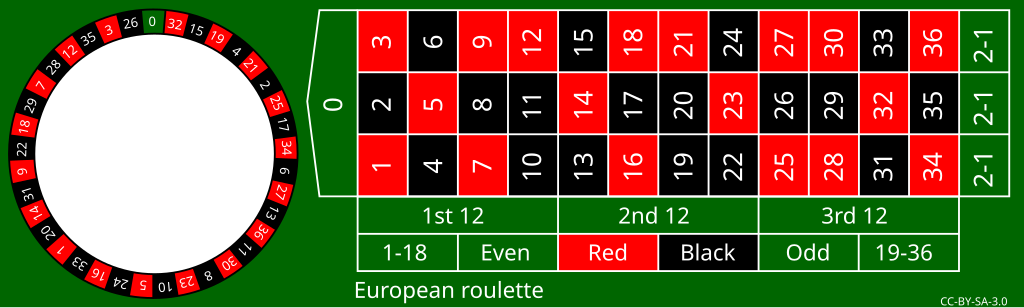
Similarities dominate the physical wheel design of French and European roulette variants, with both featuring identical 37-pocket configurations that include numbers 1 through 36 and a single green zero. The layout of the numbers remains consistent between these two versions, with the same sequence and arrangement on both the French roulette wheel and European roulette wheel.
Where these variants separate is in their table presentation rather than wheel mechanics. French roulette tables typically display betting terms in French and incorporate additional betting options known as “called bets” not found in standard European versions. The design aesthetic furthermore differs, with French roulette embracing a more elaborate, traditional French style compared to the straightforward approach of European roulette tables. In spite of these presentational differences, players face identical mathematical odds when spinning either wheel with its identical pockets.
House Edge Disparities Between Variants
While French and European roulette share the same physical wheel configuration, they differ significantly in a less visible but financially critical aspect: house edge. French roulette offers players a considerable advantage with a house edge of just 1.35% when employing the distinctive La Partage or En Prison rules, which apply specifically to even-money bets when the ball lands on zero.
European roulette, in spite of featuring the same single zero layout, maintains a consistent 2.7% house edge without these loss-mitigating mechanisms. Both variants dramatically outperform American roulette’s 5.26% house edge, which results from the additional double zero pocket. Players seeking ideal return to player percentages typically gravitate toward French roulette, recognizing that its specialized rules effectively reduce the mathematical disadvantage by half compared to standard European tables.
The La Partage and En Prison Rules
French roulette incorporates two distinctive rules absent in European roulette: La Partage, which returns half of even-money bets when zero appears, and En Prison, which allows players to recover their original stake on the subsequent spin. These specialized regulations significantly reduce the house edge to 1.35%, compared to European roulette’s 2.7% advantage. Implementation varies among casinos, with some establishments offering only La Partage or En Prison, while others provide both options for players seeking ideal conditions.
Return on Zero Spin
When the ball lands on zero, a critical distinction emerges between French and European Roulette variants. In French Roulette, players benefit from two player-friendly rules: La Partage and En Prison. Under La Partage, players reclaim half their even-money bets when zero appears, reducing the house edge to approximately 1.35%. On the other hand, the En Prison rule allows these bets to remain on the table for another spin, providing a second opportunity to win.
European Roulette offers no such provisions. When zero hits, players lose their even-money bets entirely, creating a significant strategic disadvantage compared to the French version.
This fundamental difference makes French Roulette mathematically superior for players seeking to minimize losses and extend their playing time. The zero-spin rules represent perhaps the most compelling reason experienced players prefer French Roulette’s more favorable conditions.
Enhancing Player Odds
How significantly can a player’s odds improve with specialized table rules? In French Roulette, the La Partage and En Prison rules dramatically reduce the house edge to as low as 1.35% on even-money bets, creating a distinct advantage over European Roulette. With La Partage, players recover half their stake when zero appears, while En Prison offers a second chance by keeping the bet active for another spin—both providing potential recovery of losses.
These specialized rules, exclusive to French Roulette, elevate experience by offering players a statistical advantage not found in European Roulette variants. The mathematical difference may seem modest, but for strategic bettors seeking ideal conditions, these rules represent a vital differentiator. Long-term players particularly benefit from this reduced house edge, making French Roulette tables worth seeking out for those prioritizing favorable player odds.
Rule Implementation Variations
Understanding the precise implementation of specialty rules reveals the true advantage French Roulette holds over its European counterpart. While European Roulette maintains a standard structure, French Roulette incorporates two distinctive rules that significantly impact winning chances: La Partage and En Prison. These rule variations apply exclusively to even-money bets when zero appears, creating a strategic advantage unavailable in European Roulette.
- La Partage returns half your stake when zero hits, immediately reducing the house edge to 1.35%
- En Prison gives your bet a second chance by “imprisoning” it for another spin
- European Roulette offers no such safety nets, maintaining a consistently higher house edge
- Players seeking maximum freedom from house advantage naturally gravitate toward French Roulette tables
Savvy players recognize these implementation differences as vital factors when selecting which version to play.
Table Layout Distinctions
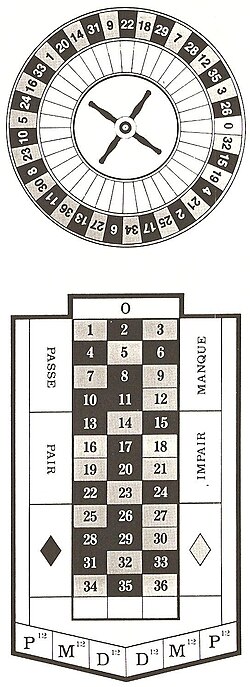
The physical structure of French and European roulette tables reveals significant differences in spite of their shared green zero pocket and identical number sequence. French tables feature a dedicated call bet section for complex wagers like “Tiers du Cylindre” and “Les Voisins de Zero,” which standard European layouts typically omit. The arrangement of outside bets likewise differs substantially, with French tables splitting these options across two sides while European tables consolidate them on a single side of the layout.
Green Zero Pocket
Both French and European roulette wheels share a defining characteristic: a single green zero pocket. This vital element distinguishes them from American roulette, which incorporates both 0 and 00 pockets. The single zero configuration directly contributes to the lower house edge in both French and European variants, making them mathematically superior options for players seeking better odds.
- The green zero pocket maintains identical number placements on both wheel types in spite of table layout differences
- French roulette’s unique “La Partage” and “En Prison” rules activate when the ball lands on zero, offering mitigation against losses
- Outside bets retain their positions relative to the zero pocket across both variants
- The single zero configuration translates to approximately half the house edge compared to American roulette’s double-zero format
Number Sequence Arrangement
While sharing a single-zero configuration, French and European roulette exhibit distinct table layouts and number sequences that significantly impact betting strategies and gameplay. The number sequence in French roulette is purposefully arranged to optimize betting opportunities, particularly for specialized wagers like the “Voisins du Zero” (neighbors of zero), enhancing winning probabilities through strategic number placement.
Although both variants contain identical numbers (1-36 plus a single zero), their table layouts reveal essential differences. French roulette tables display betting terms in French and feature outside bets divided between two table sides. This contrasts with European roulette, which positions outside bets on one side, similar to American tables.
The unique arrangement in French roulette allows players to access called bets unavailable in European roulette, creating distinctive strategic possibilities based on the specialized layout of numbers.
Call Bet Section
Perhaps the most distinctive feature separating French roulette from its European counterpart lies in its specialized call bet section, which fundamentally transforms betting possibilities for players. French roulette’s distinctive layout incorporates a racetrack feature displaying unique betting combinations—Voisins du Zero, Tiers du Cylinder, and Jeu Zero—covering specific wheel segments around the zero.
- Experience complete betting freedom with French roulette’s call bet section, unavailable in the European version
- Unlock strategic advantages through specialized number groupings that European players cannot access
- Navigate the wheel more intuitively using the visual racetrack representation of number sequences
- Transcend the limitations of standard inside and outside bets with sophisticated betting combinations
European roulette maintains a simpler table structure without these call bet options, restricting players to conventional betting patterns and lacking the strategic depth that French roulette’s specialized layout provides.
Betting Options Unique to French Roulette
French Roulette distinguishes itself through specialized betting options not found in its European counterpart. Players can investigate Voisins du Zero, which covers numbers between 22 and 25 with nine chips, offering targeted position on the wheel. Le Tiers du Cylinder presents another unique bet, encompassing numbers from 27 to 33 with six chips distributed strategically.
The Jeu Zero bet focuses specifically on six numbers surrounding zero plus the zero itself, creating a concentrated betting opportunity. Orphelins covers eight numbers overlooked by other special bets, playable as either splits or straight bets, ensuring extensive wheel coverage.
These advanced betting options provide players with sophisticated strategic choices beyond standard European Roulette selections, allowing for more intricate gameplay and tailored risk approaches based on wheel sections rather than number properties alone.
Language Used on Gaming Tables
The linguistic distinction between French and European roulette becomes immediately apparent through table labeling conventions. French roulette tables feature betting options labeled in their native tongue, with terms like “Manque” for low numbers and “Passe” for high numbers, while European roulette typically employs English terminology. The layout architecture likewise differs—French tables position betting options above inside bets, while European tables maintain a more straightforward arrangement with clearly defined betting boxes.
- French terminology creates an authentic gaming culture that transports players to elegant Parisian casinos
- The distinctive “Tiers du Cylindre” and “Les Voisins de Zero” called bets preserve gambling tradition
- Language variations reflect regional gaming heritage rather than mere aesthetic differences
- European roulette’s standardization offers accessibility while French tables celebrate linguistic distinctiveness
Dealer and Croupier Roles in Both Versions
Beyond the linguistic distinctions on gaming tables, personnel management represents another significant difference between these two roulette variants. While both French and European roulette employ croupiers who spin wheels and manage bets, French roulette often utilizes two dealers per table rather than one, accommodating larger player volumes and enhancing interaction.
The French croupier’s responsibilities extend to announcing winning bets and managing called bets specific to French roulette. Furthermore, these professionals must master unique rules like La Partage and En Prison to effectively oversee gameplay. Though their fundamental roles remain similar across variants, the pace of play differs considerably. French roulette typically progresses more slowly, allowing the croupier additional time to interact with players and manage the more complex betting structure intrinsic to this sophisticated version of the game.
Historical Origins and Evolution
Origins of modern roulette can be traced to 18th-century France, where mathematician Blaise Pascal’s experiments with perpetual motion devices inadvertently created the foundation for what would become one of the world’s most iconic casino games.
French roulette emerged first, establishing the fundamental wheel design with 37 pockets. European roulette followed in the 19th century when the game became standardized for international casinos while preserving the single-zero format. The American variation veered by introducing the double zero.
- The La Partage rule in French roulette represents a direct link to its aristocratic Parisian origins
- European roulette’s standardization liberated the game from regional constraints
- French betting options maintain authentic terminology, connecting players to centuries of tradition
- Both versions share the same wheel design—a testament to the game’s enduring mathematical elegance
Best Strategies for Each Roulette Variant
While historical foundation shapes both French and European roulette, strategic approaches represent another dimension where these variants distinctly separate themselves. French Roulette offers unique advantages through La Partage and En Prison rules, reducing the house edge to just 1.35% on even-money bets—a significant opportunity for the strategic player.
| Strategy Element | French Roulette | European Roulette |
|---|---|---|
| House Edge | 1.35% (with rules) | 2.7% |
| Special Bets | Voisins du Zero, Tiers du Cylinder | Standard bet options |
| Ideal Approach | Utilize La Partage rules | Number grouping strategies |
European Roulette, while lacking these special rules, compensates with a cleaner betting structure that supports traditional betting strategies like Martingale or Fibonacci with greater effectiveness than American variants. Its single-zero wheel provides superior odds of winning, making number grouping strategies particularly viable.
